
Why Foster and Adopted Children Think Everything Is Their Fault
Aug 11, 2026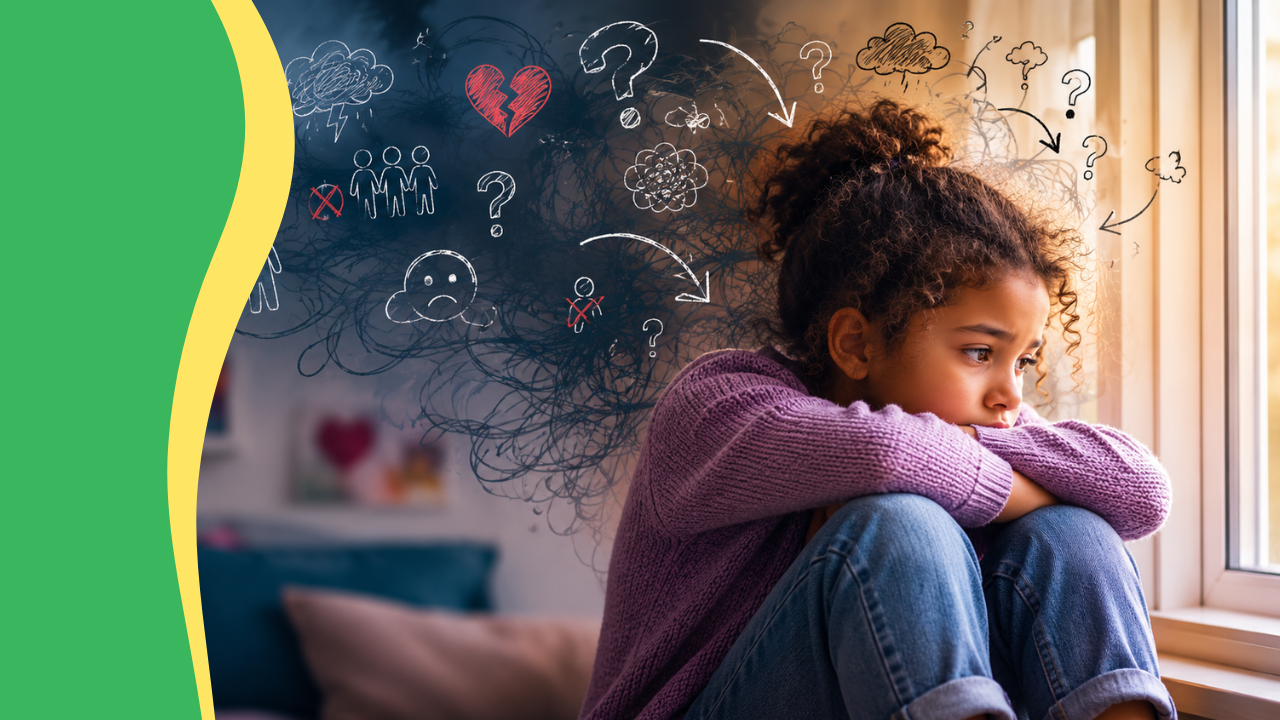
Children with developmental trauma often feel like everything is their fault. If they had been better, if they weren't so difficult, if they were smarter, if they had behaved differently, if they had known what someone needed before they needed it, if they were more lovable…maybe things would have gone differently.
Maybe Mom wouldn't have gotten angry. Maybe Dad wouldn't have left. Maybe they wouldn't have been removed. Maybe the placement wouldn't have disrupted. Maybe this person wouldn't be upset with them now.
For many foster and adopted children, self-blame isn't just something they occasionally struggle with. It can become woven into the fabric of how they understand themselves and the world around them. When something goes wrong, they don't necessarily stop and wonder, Was that my fault?
They already know: It was because of me.
And if you spend your life believing that you are the reason things go wrong, it's pretty hard to develop a healthy sense of self-worth.
But here's the thing I want us to understand before we talk about children: The instinct to assign blame isn't unique to kids with trauma. We all do it. The difference is that children with developmental trauma have often learned to point that blame directly at themselves.
Why Do We Look for Someone to Blame?
Think about the last time you heard about something terrible happening to someone. Maybe you read a story about a child accidentally being left in a hot car. Maybe someone got scammed. Maybe you watched one of those shows about someone discovering the person they married had an entire secret life.
How quickly does your brain start doing this?
I would have noticed the red flags. Why didn't they check that first? They should have known. I would never do that.
We're trying to make sense of what happened, but we're also doing something else: we're protecting ourselves. Because if I can identify exactly what that person did wrong, I can tell myself, I wouldn't do that, so this couldn't happen to me.
Blame gives us a sense of safety. If someone is at fault, the world feels a little more predictable. If I know exactly what caused the bad thing, I can avoid doing that thing and therefore protect myself from the same outcome.
The much scarier possibility is that sometimes crappy things happen to good people who took perfectly reasonable precautions.
Sometimes the air conditioner breaks. Sometimes you miss an appointment. Sometimes relationships end. Sometimes someone treats you poorly.
And sometimes a kid gets ahold of a lipstick and writes all over your brand-new couch.
Ask me how I know.
What a Lipstick-Stained Couch Taught Me About Blame
I recently bought a new couch. I intentionally bought a nice one because I wanted something that would last. I have kids, and I didn't want to replace a cheap couch every couple of years. I wanted to be able to have something nice in my house and actually enjoy it.
Then my son got ahold of a lipstick and wrote all over it.
I was devastated, and almost immediately, I got on the blame train.
My mom had accidentally left the lipstick at my house. I had found it after she left and put it in a drawer. So first I blamed her. Why did she leave that here? She knows I have kids. Why does she leave her stuff around?
Then I blamed myself. Why didn't I just throw it away when I found it? I don't even wear that lipstick. Why wasn't I watching him more closely?
But when I really sat with my reaction, I realized there was a much bigger story underneath all that blame:
See? You can't have nice things.
Why did you think you could buy yourself a beautiful couch and actually enjoy it? Maybe you just need to wait until your kids are older before you can have things you care about.
Except that's ridiculous. I don't want to spend the next decade believing I can't have nice things.
The truth was much less dramatic. My mom left a lipstick. I put it in a drawer. My son found it. My couch got stained. Life happened.
Whether I could perfectly assign fault didn't change the situation in front of me. I still had a lipstick-stained couch. So the much more useful question became: What do I do now?
And that experience made me think about how differently this blame reflex plays out for children who have experienced developmental trauma.
Why Foster and Adopted Children Blame Themselves
Children naturally understand the world through themselves. They don't yet have the adult capacity to step outside a situation and consider all of the complicated things that may be happening inside another person.
A young child doesn't think, Mom is struggling with her own unresolved trauma and doesn't currently have the emotional capacity to consistently meet my needs. They experience something much simpler: Mom isn't meeting my needs. There must be something wrong with me.
A child whose parent is angry doesn't necessarily think, Dad had a difficult day at work and doesn't know how to regulate his emotions. They think, I made Dad mad.
A child whose parents divorce may think, If I had behaved better, maybe they would have stayed together. A child who moves between foster homes may believe, Nobody wants me. A child whose adoption is struggling may conclude, I ruin everything.
When these beliefs form very early in life, they can become more than thoughts. They become a knowing.
The child doesn't have to consciously think, Maybe I'm the problem. They already experience themselves as the problem. That's why self-blame in children with developmental trauma can be so difficult to shift.
When Self-Blame Becomes Part of a Child's Identity
There's an important difference between guilt and shame.
Guilt says: I did something bad.
Shame says: I am bad.
When self-blame has been internalized, mistakes don't remain isolated experiences. They become evidence for something the child already believes about themselves.
A teacher corrects them and they think, I'm stupid. A friend is quiet and they assume, They're mad at me. A foster or adoptive parent is tired and they wonder, What did I do? Someone needs to reschedule and the child thinks, They don't really want to spend time with me. Another child gets attention and suddenly it's, They like them better. A mentor seems distracted and the child concludes, I'm boring.
From the outside, these can look like huge conclusions based on very small events. But the child's brain isn't evaluating each experience from scratch. It's adding evidence to something the child already believes:
People don't want me. I mess things up. Something is wrong with me. I'm to blame.
Imagine how much pressure that creates. You're not just responsible for yourself. You start feeling responsible for everyone's mood, everyone's behavior and whether every relationship around you stays intact.
Then imagine trying to build self-worth on top of that.
Why “It's Not Your Fault” May Not Be Enough
Our instinct when we hear a child blaming themselves is often to immediately reassure them: “It's not your fault.”
There are certainly times children need to hear those words. But we also need to understand what we're asking them to do when we say them.
We may be arguing against a belief that has been built through years of experience. If a child has collected hundreds or thousands of moments that they believe prove I'm the problem, our one statement saying No, you're not isn't necessarily going to undo that.
Instead of immediately correcting the child's interpretation, get curious about it.
Let's say a child tells you, “Mom is always on her phone because she doesn't want to spend time with me.”
You might start with, “What makes you think that?” Then you can begin exploring: “What else could be happening?”
Maybe Mom is working. Maybe she's answering an important message. Maybe she's making a grocery list. Maybe she's stressed or distracted. Maybe she's doing something completely unrelated to the child.
The goal isn't for us to give the child the “right” story, because the truth is, we may not know the right story either.
The goal is to help the child discover something much more valuable:
My first explanation isn't necessarily a fact.
That's cognitive flexibility. For a child whose brain has learned to immediately fill uncertainty with It's because of me, learning to consider other possibilities is a powerful life skill.
Trauma-Informed Mentors Need to Watch Their Own Blame Reflex
This is also where we have to look at ourselves, because remember: we have a blame reflex too.
Pay attention to how often we use language like, “Why did you do that?” “You should have…” or “Look what happened because you…”
That doesn't mean children should never be held accountable. In fact, responsibility is one of the core life skills we intentionally build through Stable Moments. But there's an important difference between teaching responsibility and teaching blame.
We want children to experience ownership positively too. Look what happened because you followed through. You remembered what needed to be done. You took initiative. You made a plan and completed it.
We don't want responsibility to mean, I am responsible for everything bad that happens.
We want it to mean, My choices have power, and when something happens, I can decide what to do next.
Fault and Responsibility Are Not the Same Thing
This distinction is incredibly important for children who already carry too much blame.
Something can require a response without requiring shame.
You spilled something? Let's clean it up.
You forgot something? Let's figure out what to do next.
You hurt someone's feelings? Let's repair it.
You got dysregulated and did something you regret? Okay. What can we do now?
Sometimes I make a mistake. Sometimes someone else makes a mistake. Sometimes nobody makes a mistake. And sometimes we simply don't know exactly why something happened.
In every one of those situations, we can still ask the same question:
What do we do next?
That's very different from asking, Whose fault is this?
And I think that's an important distinction for adults too. Think about something as simple as a couple missing their child's doctor's appointment. The moment they realize it, one person might say, “You didn't tell me!” The other says, “I put it on the calendar!” Suddenly we're building a case for why this wasn't our fault.
But none of that changes the fact that the appointment was missed. What needs to happen now? Make another appointment. Decide who's going to take the child. Maybe create a better system for next time.
We can take responsibility for what happens next without needing to beat ourselves—or someone else—up over what already happened.
Trauma-Informed Mentoring Can Help Children Build a New Story
This is why the small moments inside a consistent mentoring relationship matter so much.
A child may have spent years collecting evidence that they are the problem. We aren't going to undo that belief with one conversation. But over time, we can help them collect new evidence.
They can discover that a mistake can happen without someone shaming them. Someone can have a bad day and it doesn't have to be because of them. Someone can disagree with them and still care about them. They can mess up and repair it. They don't have to predict everyone's needs to keep themselves safe. And they don't always have to know exactly why something happened.
These aren't necessarily huge therapeutic breakthroughs. They're small moments in everyday relationships.
But small moments, repeated over time, become new experiences.
That's why we call our program Stable Moments.
Helping Foster and Adopted Children Move From Blame to Self-Worth
The goal isn't to teach foster and adopted children that nothing is ever their fault. That's not healthy either. The goal is to help children accurately assess what's happening instead of automatically defaulting to, This happened because of me.
We want them to learn that sometimes they're responsible. Sometimes someone else is. Sometimes nobody is. Sometimes life just happens.
And regardless of which one is true, they can decide what they want to do next.
That's where safety can eventually come from—not from perfectly identifying who caused every painful thing, not from predicting every possible problem before it happens, and certainly not from carrying the weight of everyone else's emotions and choices.
Safety can begin to come from knowing:
Whatever happens, I can respond.
So the next time you notice a child blaming themselves—or catch yourself desperately trying to figure out whose fault something is—get curious.
What story am I telling myself about what happened? What else could be true? Do I actually know?
And most importantly:
What do I want to do next?
Because maybe that mistake doesn't need to become another piece of evidence that you're irresponsible. Maybe that canceled plan doesn't need to become evidence that nobody wants you. Maybe that lipstick-stained couch doesn't need to become evidence that you can't have nice things.
Maybe life happened.
And you can move forward anyway.
One child. One hour a week. One life changed.
Learn how to launch a program today.
Get new activities and trauma tidbits straight to your inbox!
We hate SPAM. We will never sell your information, for any reason.

